
Professional Lice Checks

Stop guessing and stressing.
Get checked today and get back to normal life.

Accurate

If there is one bug or nit, we’ll find it.

lice-check-same-day

Fast

Same-day checks available.

Fair Pricing

Flat-rates reduce uncertainty.

How Our Process Works — How to Remove Lice from Hair Permanently

  1. Confirm & book: Tell us your situation and pick a time. We’ll explain prep and answer questions about places that treat lice near me.

  2. Precision treatment: We apply targeted heat, then section and comb every strand to remove bugs and nits.

  3. Finish & verify: We use a safe oil to reveal stragglers and verify the clean result on a white towel.

  4. Aftercare & prevention: You get a short home plan that protects the result and prevents re-infestation.

What to expect at your appointment:
Plan for about 30–60 minutes depending on hair length and density. You’ll sit comfortably while the technician sections hair, works methodically from scalp to ends, and wipes the comb onto a white towel so you can see what’s coming out. We explain each step during the lice check and treatment, show progress as we go, and answer questions before you leave with simple written aftercare.

Start your lice treatment today—clear, fast, and family-friendly.
Why Checking for Head Lice Matters
  • Ignoring the signs of lice turns a small problem into a big one.
  • Missed nits will hatch and spread before you realize it.
  • Parents spend days DIY-ing without knowing whether it’s necessary — or if it worked.
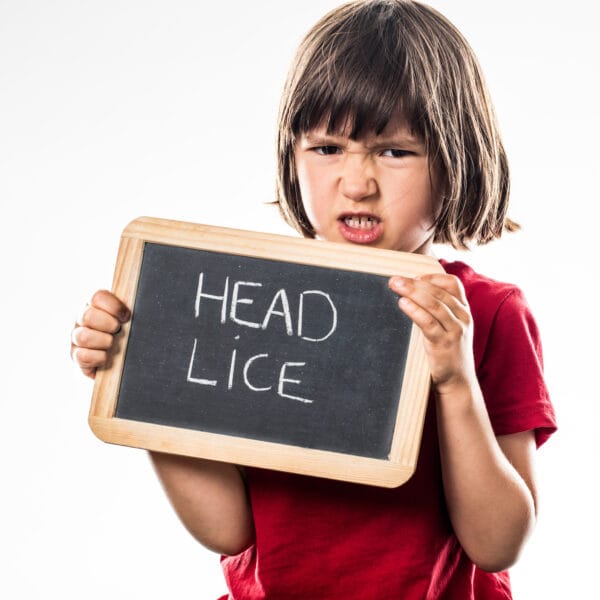
Child holding a sign that says head lice

People talking about lice?

When to get checked.

If anyone in your close social group, child’s classroom, daycare, or friend group is talking about lice it’s time to get checked.

Lice Checks — The Lice Charmers Way

Professional vs DIY Lice Checks
Accuracy, comfort, and education.

You can learn how to check yourself for lice or how to check for lice on your own head, but even with mirrors and combs, it’s easy to miss nits close to the scalp — especially if you have light or thick hair. Lice move quickly, and a missed egg can restart the infestation.

At Lice Charmers, professional tools and experience make the difference. Our trained eyes spot what others can’t, giving you fast, certain results.

Don’t spend hours guessing — let Lice Charmers confirm it once and for all.

Child sitting for lice treatment at a lice clinic
Smiling girl receives head lice treatment on her hair

We’ll show you what we find, so you can see for yourself.

9+

Years of experience & and counting

How to Check for Lice & Nits (Lice Eggs)

Types of Check: Dry Checks vs Wet Checks

If you’re in a pinch for time, do a quick dry check.

If there is a high risk of exposure and you have time, do a wet check. We only do wet checks on our clients because they are much more accurate.

How to Do a Dry Check

  1. Go to a well lit area.
  2. Use a rat-tail comb or pencil and part the hair on the nape of the neck, around the ears, and the crown of the head.
  3. Inspect the scalp for anything in the lice identification section below.

How to Do a Wet Check

Supplies: paper towels, hair conditioner, detangling brush or comb, and a metal-toothed lice comb.

  1. Wet the hair and massage a small amount of conditioner throughout to prevent snagging.
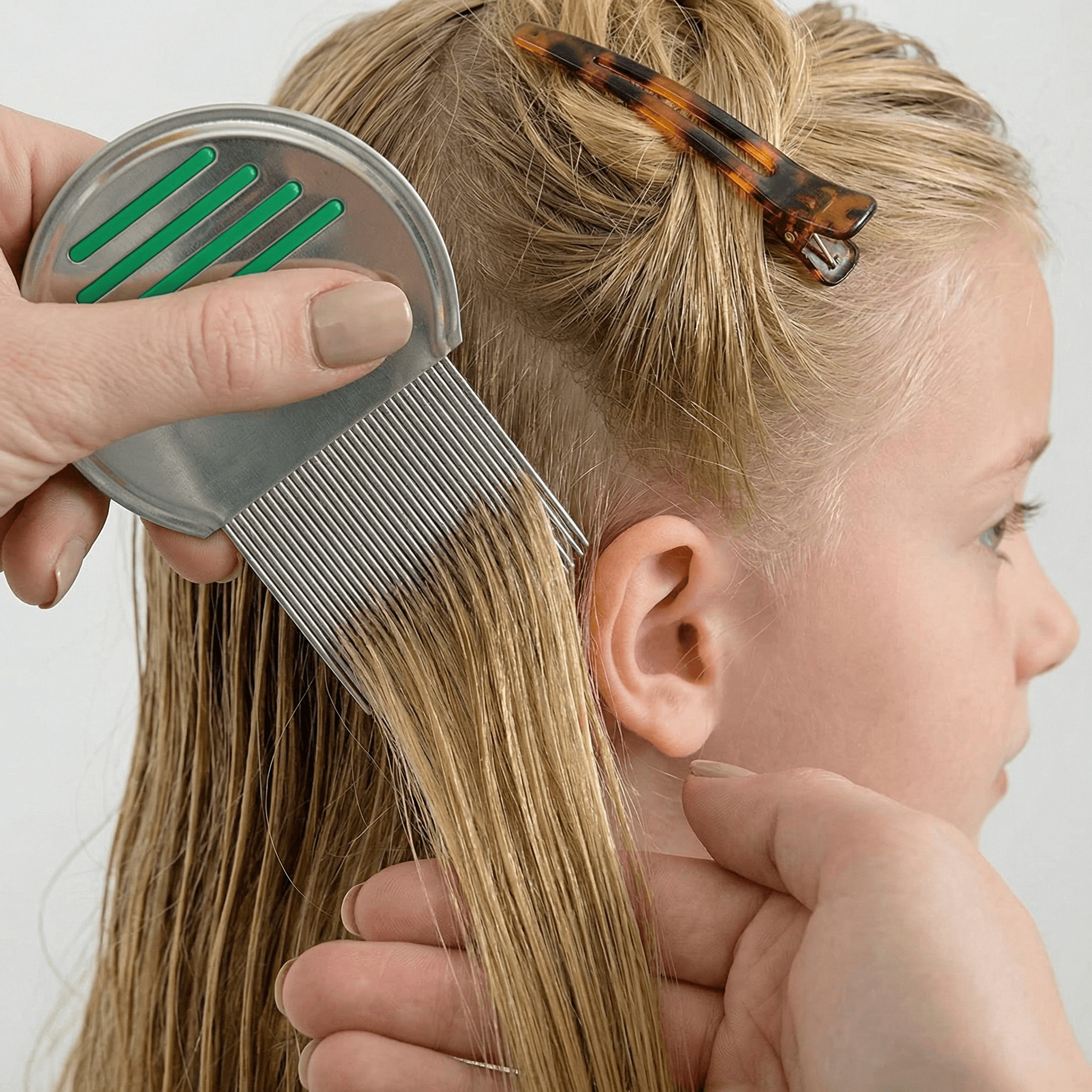
  2. Hold the lice comb at a 15-degree angle to the scalp and comb from roots to end in one smooth motion.
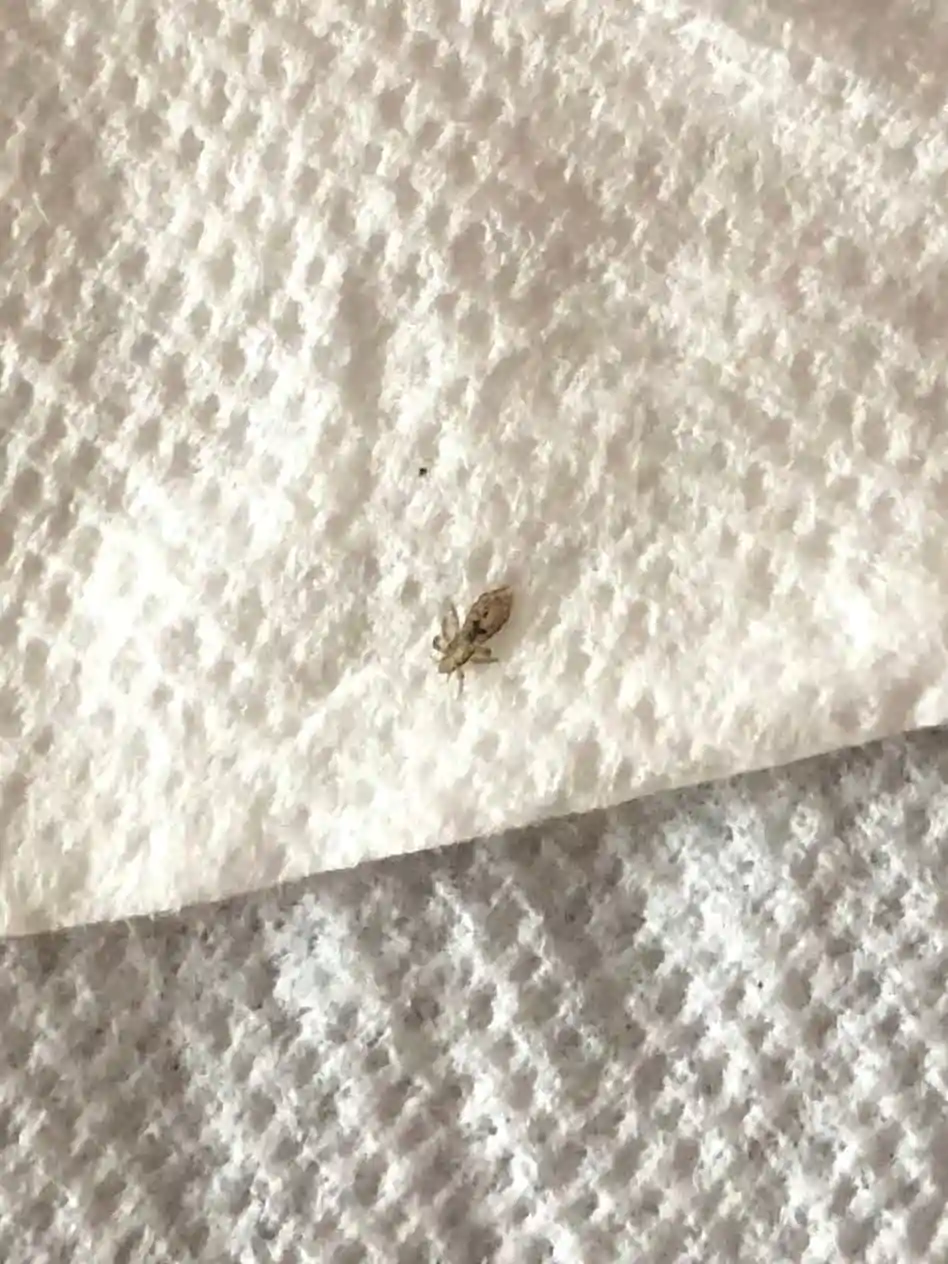
  3. Wipe the comb with a paper tower and compare anything you find to the lice identification section below.
  4. Comb through the entire scalp in every direction, checking with the paper towel as you go.

A professional wet check takes 20-30 minutes, depending on the thickness, length, and texture of the hair.
Expect to take at least double that time for your checks because one or two missed bugs or nits is all it takes to keep a lice infestation going.

Professional lice checks are available at our clinics or in-home appointments.

Lice & Nits Identification Mini-Guide

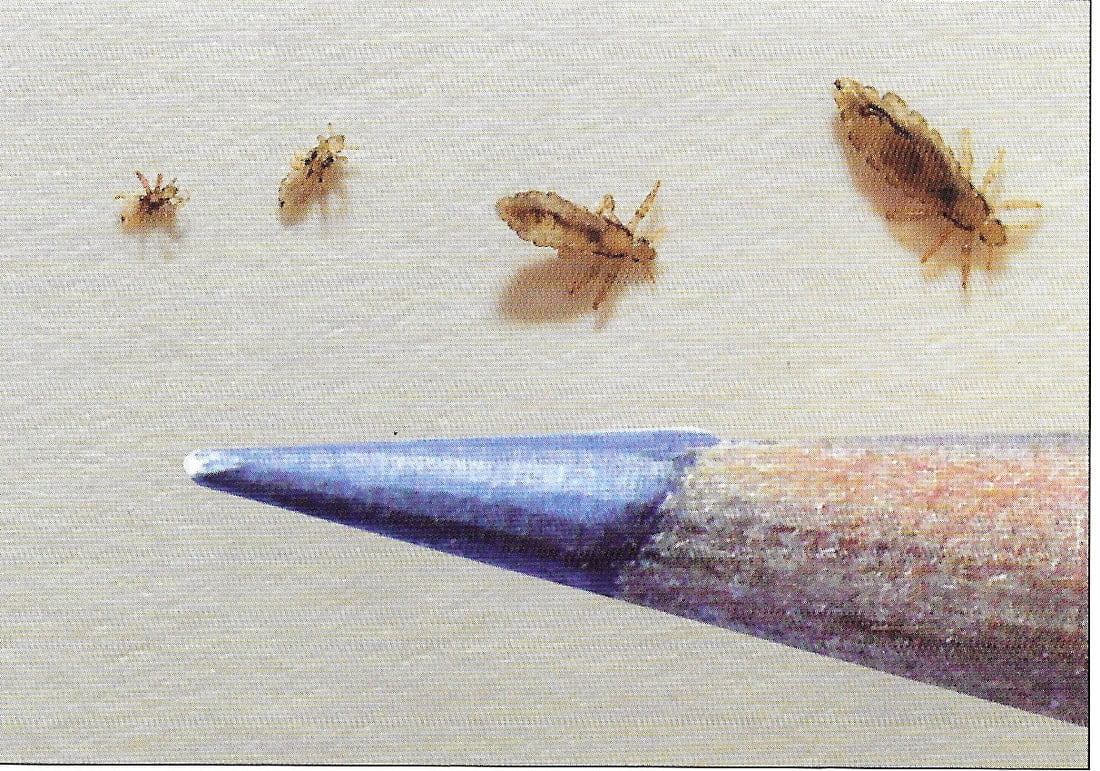
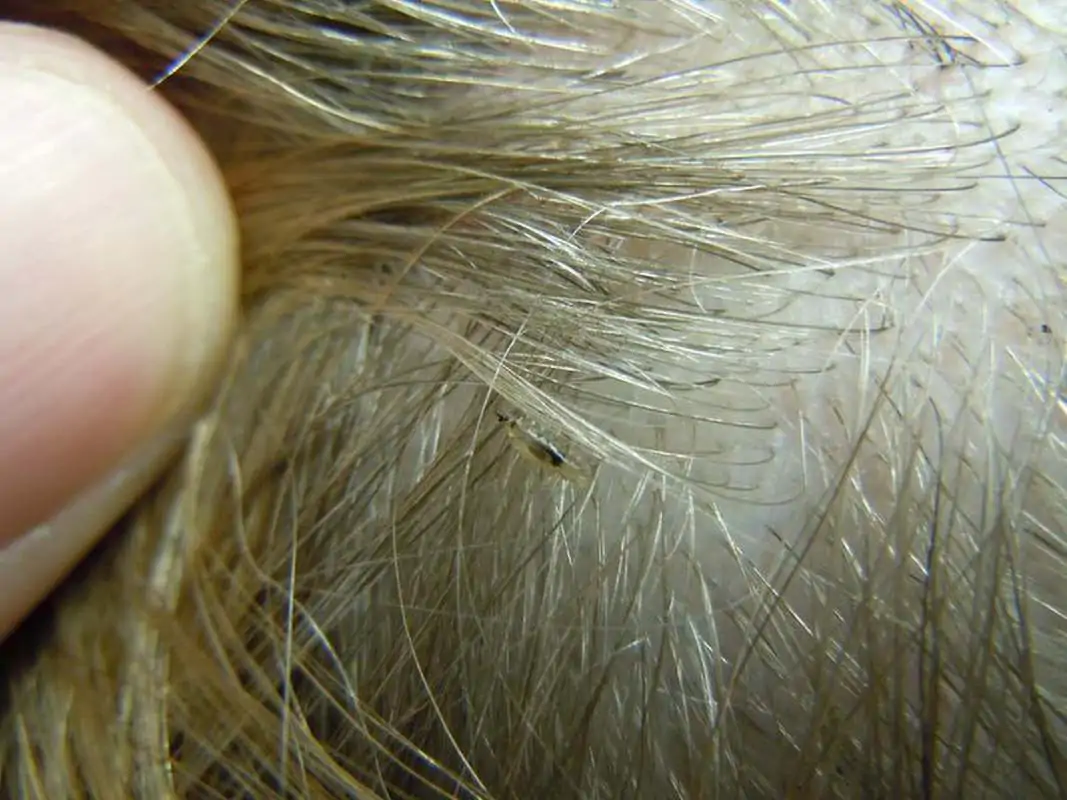
Head Lice

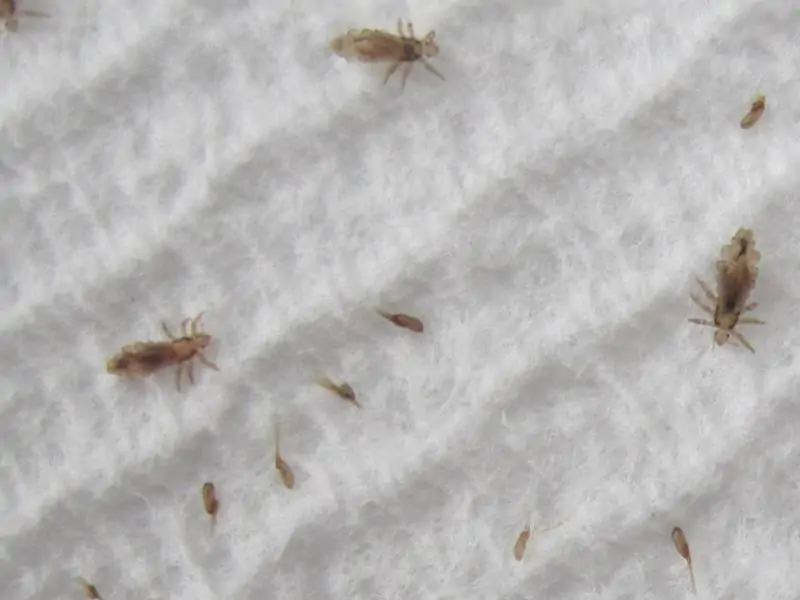
  • Six-legged
  • About the size of a sesame seed when fully grown.
  • Translucent when not digesting and brown to reddish brown when digesting.

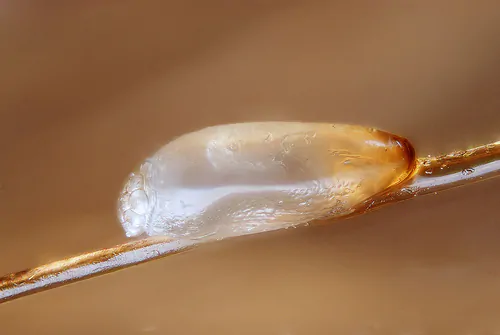
Nits
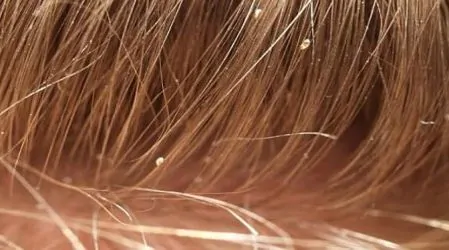
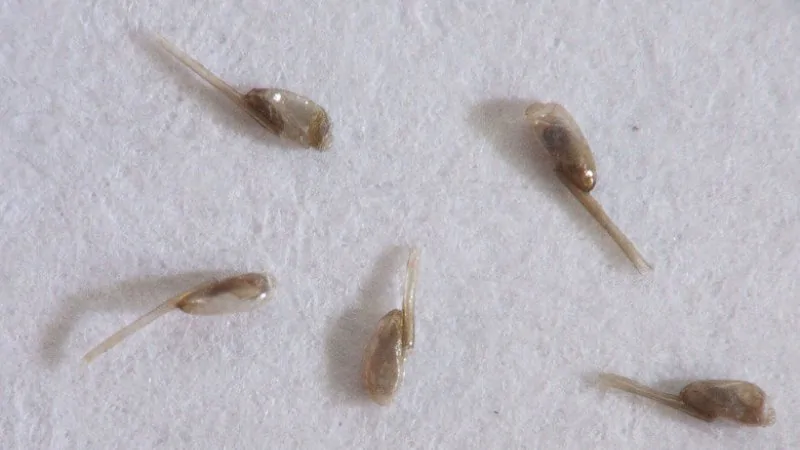
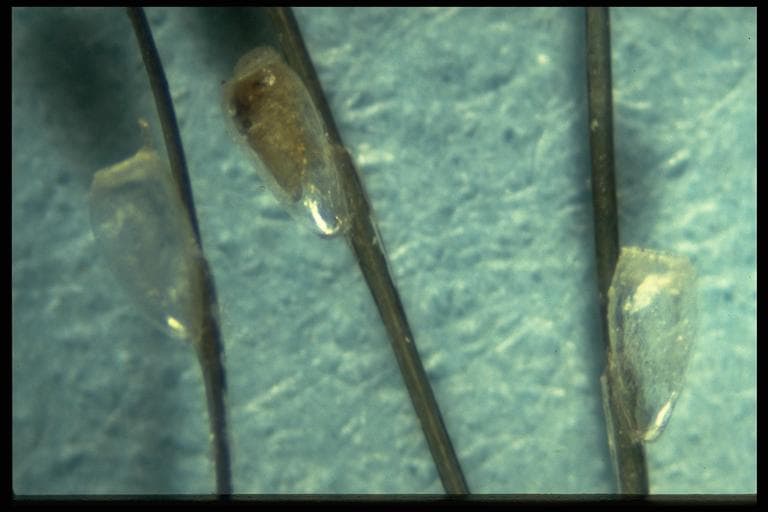
  • Shaped like a teardrop
  • As small as a grain of salt
  • Are light to dark brown when viable
  • White when empty/hatched
  • Securely glued to the hair shaft

If it’s easily flicked or blown away from the hair, it is not a nit.

How to check hair for lice?

Part the hair into small sections and look for white or brown nits near the scalp. For a sure answer, get a professional lice screening.

How to check if you have lice?

Persistent itching and tiny moving bugs on the scalp are common signs. Our technicians can confirm in minutes.

How to check for lice on yourself?

Use two mirrors or ask someone to help, but self-checks can miss hidden areas like the crown and back of the head.

What do lice in hair look like?

They’re small, sesame-seed-sized insects that move fast. Nits are glued to the hair shaft and don’t brush off easily.

Can I get a free lice check near me?

Some schools offer them, but professional screenings are more reliable and available on your schedule.

What happens if lice are found during the check?

We’ll show you the evidence, explain treatment options, and help you stop lice from spreading.

How do you know if you have lice? Check yourself.

Thoroughly checking yourself for lice is not for the faint of heart. Since you can’t see the back of your head, it’s essential to use a lice comb–or even a flea comb. Keep in mind that you need to keep combing until you’ve gone over your head multiple times in different directions. You will have a few hurdles to overcome: persistent tangles, tricky angles, and tired arms. Here are some tips on performing a complete head lice check while keeping yourself comfortable so you’ll have the stamina to keep going until the job is done!
If you want to skip the hassle and hire a professional to do it find a Lice Charmers clinic near you.

Preparing to check

Set up in a well-lit area in front of a mirror. Consider listening to music or a podcast, because you need to be patient and thorough to do a proper head check. Completely detangle the hair until there are absolutely zero tangles, then coat the hair with oil (mineral oil, coconut oil or even olive oil will work). If your hair is curly enough to form ringlets, I suggest straightening it with a flatiron before you begin.

Give the oil a few minutes to soften the hair while you prepare your tools. Check and clear anything that’s stuck between the lice comb’s teeth to prevent false positives. Next, gather several paper towels which you will use to view anything removed by the comb.

Starting your lice check

To get started, grab your lice comb and focus on combing out the easiest-to-reach areas where lice tend to group: I suggest the temple first, then behind the ears, followed by the nape of the neck. To reach behind the ears more easily, lean your head to the side, making sure to always detangle again after changing the hair’s position. To get to the nape, try sitting with your hair flipped and hanging in front of you. Glide the comb along the scalp a couple of inches at a time, then pull all the way through to the ends. Keep the comb snug against your head, holding it at about a 45-degree angle from the scalp. You are trying to scoop lice off of the scalp and trap any nits (lice eggs) that may be within ¼” of the scalp within the teeth of the comb. Holding your paper towels like a baseball mitt, wipe your comb clean to see what you’ve removed. Detangle your hair again at the first sign of resistance from snarls. Comb in as many directions as you can, going over these high-traffic areas of the head multiple times until you’re sure nothing suspicious has come out.

Next, you’re going to check all the areas in between those hotspots. Lean over and brush all the hair to one side so that it’s hanging straight down. Starting at the ear pointing upward, comb straight across the dome to the other side and pull the comb through to the ends. Try not to slow down; momentum will help you get to the other side. This step requires patience, consistent momentum, and vigilant detangling. Continue this combing technique until you’ve run the comb over your whole scalp, checking the comb with the paper towel after every swipe. Once you’ve gone over the entire head while leaning to one side, flip to the other side and repeat until you’ve gone over the whole head again in the other direction.

If you’ve taken the time to follow these steps and found nothing on the paper towel that resembles head lice or nits, congratulations! You can be confident that you’re lice-free!

Doing a professional quality lice check isn’t easy. Especially when you don’t know what the best tools are to make the job as efficient and accurate as possible. Here’s a quick guide to what those tools are.

Lice Check Lighting

If you don’t have good overhead lighting, an LED headlamp or bright flashlight will make it much easier to see what’s moving around on a dark scalp and identify what you remove.

Lice Combs

A high-quality lice comb has metal teeth at least 1.5 inches long and very tightly spaced to catch as many adult bugs and nits as possible with each swipe. We prefer combs where the teeth are connected to a metal grip with solder instead of set in plastic to prevent the teeth from flexing and bending. Metal combs are easier to sanitize and have better durability after running through a hot dishwasher time after time.

A detangling comb, not a brush, will make quick work of knotted hair and make it much easier and less painful to use the lice comb, which can pull on kinky, thick, and or processed hair.

Lubricant/Hair Oil for Lice Checks

Hair conditioner, coconut oil, or other hair oil traps the lice in place and helps the combs slide through the hair. It may suffocate some of the lice as well, but will not take care of all the nits. Don’t be afraid to really slather it on and soak the entire scalp and hair.

Photos

Taking good photos of what you find that you can send to a lice professional will give you a chance to have an expert take a look at what you’ve found and potentially save you a lot on money by preventing unnecessary treatment and time spent traveling, waiting, and being checked in a lice clinic.

Magnifying Glass

This is a huge help for those of use with imperfect eyesight. Use it to help tell if what you found is a tiny nit or just a piece of dirt or dandruff.

Paper Towels

Paper towels are the best thing you can use to pull everything you comb out off the lice comb and serve as a great background to inspect your findings for evidence of lice or for taking photos.

Arming yourself with the right tools will help you catch lice early and save time and money on treatment. Be prepared and you’ll always catch lice unprepared.